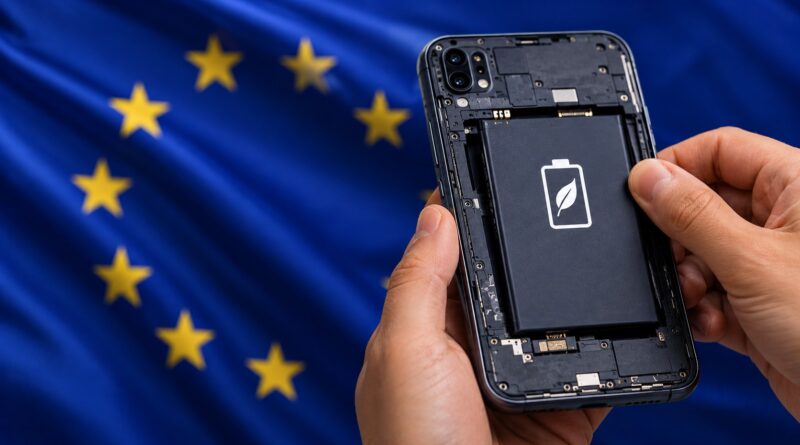
Europe’s 2027 Mobile Phone Battery Mandate – Good News for Many
From 18 February 2027, new phones and tablets sold in the European Union will require batteries that owners can pull out and swap themselves, using nothing more specialised than commercially available tools. It’s the biggest hardware mandate to hit the phone industry since Brussels forced everyone onto USB-C.
But as with most laws, the big fish are off the hook. The iPhone, the Galaxy S series, most Pixels — the flagships that dominate the “why can’t I just swap the battery” conversation — are on track to be exempt from ever needing one.
There was a time when this wasn’t a regulatory question at all. The Nokia 1100, still the best-selling handset in history, shipped with a battery you could pop out with a fingernail. That expectation quietly disappeared somewhere around the first unibody iPhone, and nobody voted on it.
What the rule actually says
The requirement comes from Article 11 of the EU Batteries Regulation, (EU) 2023/1542, which entered into force in 2023 but only bites on removability and replaceability from 18 February 2027. The wording is specific: a battery counts as “readily removable” if an end user can take it out and fit a replacement without special tools, without destructive heat or solvents, and without damaging the device or the battery in the process. Manufacturers have to publish removal and replacement instructions online, and spare batteries — original or compatible — have to stay available at a reasonable price for at least five years after the last unit of a device is sold.
That’s the headline. The catch sits in a second piece of law that quietly overrides it for the exact category of device most people care about.
The exemption that swallows the rule
Smartphones and tablets are also covered by a separate Ecodesign regulation, (EU) 2023/1670, and the European Commission’s guidance on how the two interact — published in February 2025 — settled the conflict in the manufacturers’ favour. A phone or tablet is exempt from the user-removability requirement if it meets three conditions: the battery retains at least 83% of its capacity after 500 full charge cycles, at least 80% after 1,000 cycles, and the device carries an IP67 rating or better for dust and water resistance. Clear all three, and the battery only has to be replaceable by an “independent professional” repairer — not the person who owns the phone.
Modern flagships clear that bar without much effort. Apple’s current iPhones already meet or exceed the longevity and IP67 thresholds, which is why iPhones sold in the EU from 2027 won’t be getting a removable back panel, whatever a given TikTok video insists. The same logic applies to Samsung’s Galaxy S line and most of Google’s Pixel range — two manufacturers that have spent the past year trading blows for the smartphone sales crown — because Apple and Samsung already run their own authorised battery-replacement programmes.
Right to Repair Europe, which pushed for a broader rule during the consultation, has called the carve-out “a huge opportunity missed.” The coalition wanted every smartphone and tablet battery to be end-user replaceable by default and instead got a threshold that most premium hardware clears by design.
Who the rule actually changes things for
The devices genuinely affected are the ones that don’t clear all three exemption criteria: budget and mid-range phones without IP67 sealing, tablets without proper water resistance, and — more interestingly — hardware that falls outside the phone-and-tablet Ecodesign carve-out entirely. Nintendo has already confirmed it will sell an EU-specific version of the Switch 2 with a genuinely user-replaceable battery, because a handheld games console is neither a phone nor a tablet and so answers to the general Batteries Regulation rather than the Ecodesign exemption — and the Switch 2 has no water resistance to hide behind anyway.
That’s the real shape of the 2027 rule: not a mandate that hands every device an easy-open battery door, but a filter that sorts hardware into two bins — devices good enough to buy their way out of it, and everything else.
Why Brussels is doing this at all
The regulation sits inside a broader push to cut Europe’s e-waste, which Eurostat puts at roughly 12.3 million tonnes a year. The gap between what gets bought and what gets properly recycled is stark: in 2023 the EU put 32.2kg of new electrical and electronic equipment on the market per person, against only 11.6kg of e-waste formally collected — the rest sits in drawers, gets stockpiled, or disappears into informal disposal channels. Eurostat’s 2024 figures show more than half of EU adults simply hang on to old phones rather than recycling them, and only 11% get recycled at all. The Batteries Regulation separately sets lithium recycling-efficiency targets rising from 65% in 2025 to 80% by 2031, alongside portable-battery collection targets of 63% by 2027 and 73% by 2030. Removability is one lever in that machine, not the whole plan.
There’s a precedent for an EU hardware rule spilling well past EU borders: the common-charger mandate that forced the iPhone onto USB-C took effect in December 2024, and manufacturers didn’t bother building a Lightning-only version for the rest of the world once they’d redesigned for Europe. It’s tempting to expect a repeat here. But the USB-C rule had no equivalent escape hatch — every device had to comply, full stop. The battery rule hands large manufacturers a specific, achievable exemption, which is exactly the kind of thing that stops a regional mandate from becoming a de facto global standard.
The actual takeaway
The devices due a redesign are, ironically, the ones least likely to make headlines about it — budget Android phones, off-brand tablets, anything without the water resistance and battery engineering needed to buy an exemption. The flagships everyone assumes this story is about were mostly compliant before the exemption clause was even published, because Apple and Samsung already run their own repair networks and don’t need Brussels to force the issue. If your phone lasts long enough to need a new battery and you can’t already get one swapped at an official store, February 2027 is when that starts to change. If you’re carrying an iPhone or a Galaxy S, it already has.