AI and the Face of Fear – Context Adds a New Dimension
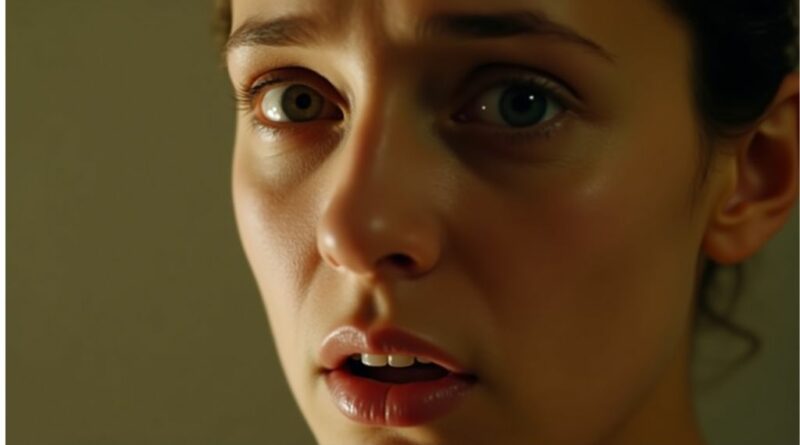
For generations, the human face has been heralded as the mirror of the soul—a canvas upon which emotions like fear are vividly painted. Think of widened eyes, a gaping mouth, or a furrowed brow, and you might imagine you’ve cracked the code of terror. Yet, a groundbreaking study from the Hebrew University of Jerusalem has turned this assumption on its head, revealing that the real key to recognising fear lies not in the face, but in the world around it. Context, it seems, reigns supreme.
Led by Professor Hillel Aviezer and Maya Lecker, this research, published on 13 March 2025 in the Proceedings of the National Academy of Sciences (PNAS), challenges a long-held assumption in psychology. Through an analysis of real-life fear responses—captured in videos of people facing heights, physical assaults, or phobia-inducing triggers—the team found that facial expressions alone were unreliable for communicating fear. Instead, it was the situational context—think body posture and environmental cues—that carried the emotional signal.
Decoding “Context” in Context
So, what exactly do we mean by context in this, well, context? The word itself, derived from the Latin contexere (“to weave together”), refers to the circumstances or background that frame an event, giving it meaning. Here, it’s the difference between seeing a wide-eyed face in isolation and witnessing that same face atop a rickety ladder, arms flailing, with a sheer drop below. Context stitches together the narrative threads—visual, spatial, and temporal—that allow us to interpret what’s really happening. Aviezer’s study suggests that, in real-life fear, the face on its own is just a fragment.
This revelation isn’t merely academic navel-gazing. It has seismic implications for fields as diverse as psychology, neuroscience, and artificial intelligence (AI). Many AI emotion-detection systems have been trained on posed expressions, assuming fear can be boiled down to a universal grimace. If context is the linchpin, such algorithms may be missing the bigger picture, literally and figuratively (read about AI limitations).
The Experiment: Fear in the Wild
To unravel this mystery, Aviezer’s team conducted 12 preregistered experiments involving 4,180 participants in total. They sourced footage of people in genuinely frightening situations—such as jumping from heights, physical attacks or phobia triggers—and dissected it into three viewing conditions: faces alone, context without faces, and full videos combining both. Participants then judged the emotions using various methods, from labelling to rating intensity.
The findings were stark. Isolated faces? A muddled mess—participants struggled to pinpoint fear. Context alone, or context with faces? Crystal clear. Fear was communicated clearly. It’s a humbling reminder that humans are wired to read the world holistically, not in fragments.
A Strange Oversight?
What’s peculiar is that this needed demonstrating at all. For years, much research leaned on the idea that fear was a facial billboard, despite everyday evidence to the contrary, although some researchers had long challenged it. After all, humans are masters of disguise. A clenched jaw or a forced smile can mask dread in a heartbeat—think of a nervous flyer chatting breezily as the plane hits turbulence. Actors, poker players, and even children learn to cloak fear behind a façade. Much of the earlier work relied on staged expressions in laboratories.
Perhaps the oversight stems from a love affair with simplicity. The face is a convenient focal point—measurable, photographable, and ripe for theorising. Context, by contrast, is messy, sprawling, and harder to pin down. But as this study proves, messiness is where the truth often hides.
The Road Ahead
The implications ripple far beyond the lab. For psychologists, it’s a call to rethink how we study emotions, moving beyond the face to embrace the full human experience (see modern psychology trends). For neuroscientists, it raises questions about how the brain integrates contextual cues—perhaps pointing to untapped neural pathways. And for AI developers, it’s a wake-up call: machines won’t truly “see” us until they learn to look beyond our skin.
As Professor Aviezer puts it, “despite the widely held belief that fear is expressed through a distinctive facial expression, real-life fear reactions tell a different story.” It’s a story written not in fleeting grimaces, but in the trembling hands, the looming shadows, and the silent screams of circumstance. Fear, it turns out, isn’t just a face—it’s a world. And until we—and our machines—learn to read that world, we’ll only ever see half the picture.